

Introduction
In today’s digital age, mastering SEO (Search Engine Optimization) is crucial for businesses aiming to succeed online. Whether you’re a small local business or a large corporation based in Sydney, understanding how SEO search engines work and optimizing your website effectively can significantly improve your visibility, traffic, and rankings.
This article will provide an in-depth explanation of SEO search engines, focusing on how white hat SEO practices can be implemented to achieve sustainable, long-term results. By the end of this guide, you will have a clear understanding of SEO’s core principles, the benefits of white hat SEO, and a step-by-step process to optimize your website efficiently for search engines.
What is SEO Search Engine?
SEO search engines refer to the process of optimizing your website so that search engines like Google, Bing, and Yahoo can crawl, index, and rank your site higher in search results. The ultimate goal of SEO is to increase your website’s visibility, drive more organic traffic, and enhance user experience, which collectively contribute to better conversion rates and business success.
Why SEO Search Engine Optimization Matters
With millions of websites on the internet, standing out in search engine results is a challenge. SEO ensures that your website gets noticed by both search engines and your target audience. A well-optimized website can drive organic traffic, increase brand awareness, and generate leads and sales without the need for expensive ads.
Core Definition & Background of SEO Search Engine
Search engines like Google use complex algorithms to crawl and index websites. These algorithms assess various factors, including relevance, authority, and user experience, to determine where your site ranks in the search engine results pages (SERPs).
The primary goal of SEO is to align your website with the best practices and guidelines set by search engines to improve its ranking. This can be achieved through on-page SEO (optimizing content and structure) and off-page SEO (building backlinks and domain authority).
How SEO Search Engine Works: The Process
1. Crawling and Indexing
Search engines send crawlers (bots) to browse your website’s content. These bots follow links on your website and gather information to index your pages. Once indexed, your site becomes eligible to appear in search results.
2. Ranking Algorithms
Search engines use algorithms to determine how to rank pages based on various factors. These include keywords, page speed, user engagement, backlinks, and content quality.
3. On-Page Optimization
This involves optimizing elements on your website, such as titles, meta descriptions, images, and internal links. Keyword optimization plays a significant role in improving relevance and helping your pages rank higher.
4. Off-Page Optimization
Off-page SEO focuses on increasing your site’s authority and trustworthiness. This is achieved through acquiring backlinks from reputable websites, social signals, and influencer marketing.
Benefits and Outcomes of SEO Search Engine Optimization
1. Increased Organic Traffic
Effective SEO search engine optimization can help your site appear on the first page of search results for relevant queries. With increased visibility, your site will attract more organic traffic, leading to greater exposure and potential customers.
2. Higher Conversion Rates
SEO enhances the user experience by ensuring fast load times, mobile-friendliness, and easy navigation. A well-optimized website results in a better user experience, leading to higher engagement and conversion rates.
3. Long-Term Success
Unlike paid ads, SEO results are long-lasting. Once your website achieves a high ranking, maintaining that position requires less effort and cost compared to ongoing advertising campaigns. White hat SEO strategies, in particular, emphasize long-term growth without resorting to shortcuts or unethical techniques.
4. Enhanced Brand Credibility
Ranking high in search results signals to users that your website is a trusted authority. This can improve your brand’s credibility and reputation, fostering customer loyalty.
Real-World Use Cases & Examples of SEO Success
Example 1: Sydney-based Business
A local Sydney business, ABC Plumbing, implemented an effective SEO strategy focusing on keywords such as “plumbing services Sydney” and “emergency plumbing Sydney.” By optimizing their website with these terms, creating high-quality blog content, and building relevant local backlinks, ABC Plumbing managed to rank on the first page of Google search results. As a result, they saw a significant increase in organic traffic and received more client inquiries, leading to a boost in sales and long-term success.
Example 2: E-commerce Website
An e-commerce store in Sydney selling eco-friendly products utilized SEO search engine optimization by targeting keywords like “eco-friendly products Australia” and “sustainable home goods.” The company also focused on creating product descriptions with rich, informative content and used white hat SEO techniques like building backlinks from sustainable living websites. This resulted in higher organic traffic, increased sales, and stronger brand recognition.
Step-by-Step Process to Optimize Your Website for SEO
Step 1: Conduct Keyword Research
Start by researching keywords relevant to your business, products, or services. Use tools like Google Keyword Planner, SEMrush, or Ahrefs to find high-volume, low-competition keywords that your target audience is searching for.
Step 2: On-Page Optimization
- Title Tags & Meta Descriptions: Ensure that your target keywords are included in title tags and meta descriptions. These are key factors for SEO and user click-through rates.
- Content Optimization: Use target keywords naturally in your content. Aim for a good keyword density without overstuffing, and make sure your content is valuable and engaging.
- Internal Linking: Create an internal linking structure that helps users and search engines navigate your site. Link relevant pages to each other to improve visibility.
Step 3: Off-Page SEO and Backlinking
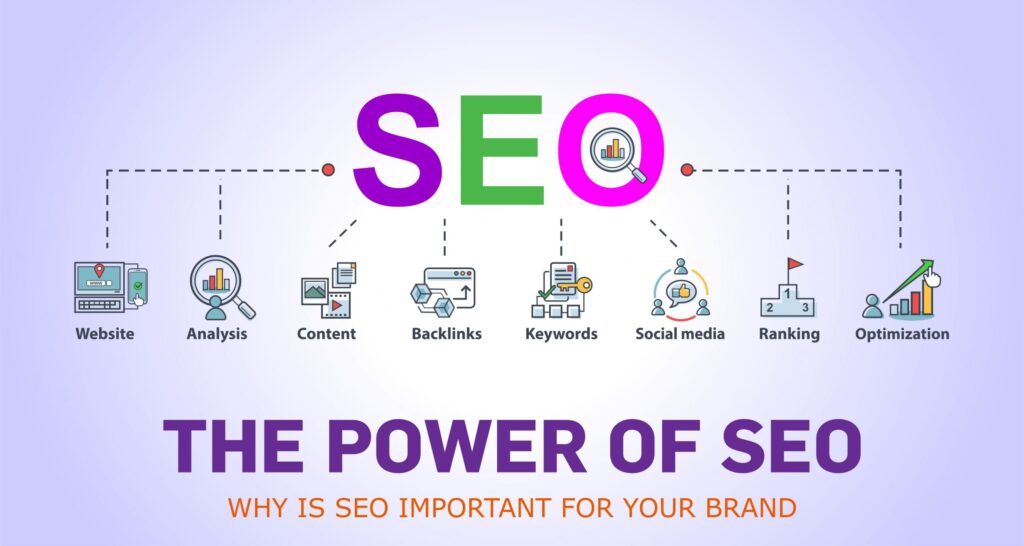
Focus on obtaining backlinks from high-authority websites. This can be achieved through guest blogging, content marketing, partnerships, or influencer outreach. The quality of backlinks is more important than quantity.
Step 4: Mobile Optimization
Ensure that your website is mobile-friendly. Google prioritizes mobile-friendly websites in search results, so this is a must for maintaining a strong ranking.
Step 5: Monitor and Adjust
SEO is an ongoing process. Use tools like Google Analytics and Google Search Console to monitor your rankings, traffic, and user behavior. Adjust your strategy as needed based on data insights.
Best Practices & Advanced Tips for SEO Search Engine Optimization
1. Focus on User Intent
Understanding and addressing user intent is crucial for SEO success. Create content that answers users’ questions or provides solutions to their problems, ensuring that your pages are helpful and valuable.
2. Improve Page Load Speed
Page speed is a ranking factor for search engines. Use tools like Google PageSpeed Insights to test your website’s speed and optimize images, code, and server response times.
3. Use Structured Data
Implement structured data (Schema markup) to help search engines understand your content better and enhance your site’s visibility in SERPs with rich snippets.
4. Regular Content Updates
Regularly update your content to keep it fresh and relevant. This will not only improve user engagement but also signal to search engines that your website is up-to-date.
Common Mistakes to Avoid in SEO Search Engine Optimization
1. Keyword Stuffing
Overloading your content with keywords can lead to penalties. Always focus on creating content that is natural, informative, and helpful to your audience.
2. Ignoring Mobile Optimization
Since mobile traffic continues to rise, ignoring mobile optimization can hurt your rankings and user experience.
3. Building Low-Quality Backlinks
Avoid acquiring backlinks from spammy or irrelevant websites. Focus on building high-quality, relevant backlinks that add value to your site.
FAQ Section
Q1: What is SEO search engine optimization?
SEO search engine optimization is the process of optimizing your website to improve its visibility in search engine results, driving organic traffic.
Q2: What is white hat SEO?
White hat SEO refers to ethical optimization practices that comply with search engine guidelines, focusing on long-term success.
Q3: How long does it take for SEO to show results?
SEO is a long-term strategy, and it can take anywhere from 3 to 6 months to see significant results.
Q4: Is SEO better than paid advertising?
SEO offers long-term benefits and sustainability, while paid advertising provides immediate results. A combination of both is often ideal.
Q5: How do I choose the right keywords for SEO?
Use keyword research tools like Google Keyword Planner to find high-volume, low-competition keywords relevant to your business.
Q6: Can SEO be automated?
While some aspects of SEO, such as reporting, can be automated, the core of SEO, including content creation and strategy, requires human involvement.
Q7: What is the role of backlinks in SEO?
Backlinks signal to search engines that your website is trustworthy and authoritative, improving your site’s ranking.
Conclusion
SEO search engine optimization is a vital strategy for any business looking to enhance online visibility and drive organic traffic. By applying best practices, such as conducting thorough keyword research, optimizing your website for both search engines and users, and building high-quality backlinks, you can achieve long-term SEO success. Remember to avoid common mistakes and continually refine your approach for sustained growth.
Now that you understand SEO search engine optimization, it’s time to take the next step and implement these strategies to boost your website’s performance in search rankings.
Call to Action:
Ready to improve your website’s SEO? Contact an SEO expert today to get started with a tailored SEO strategy for your business.